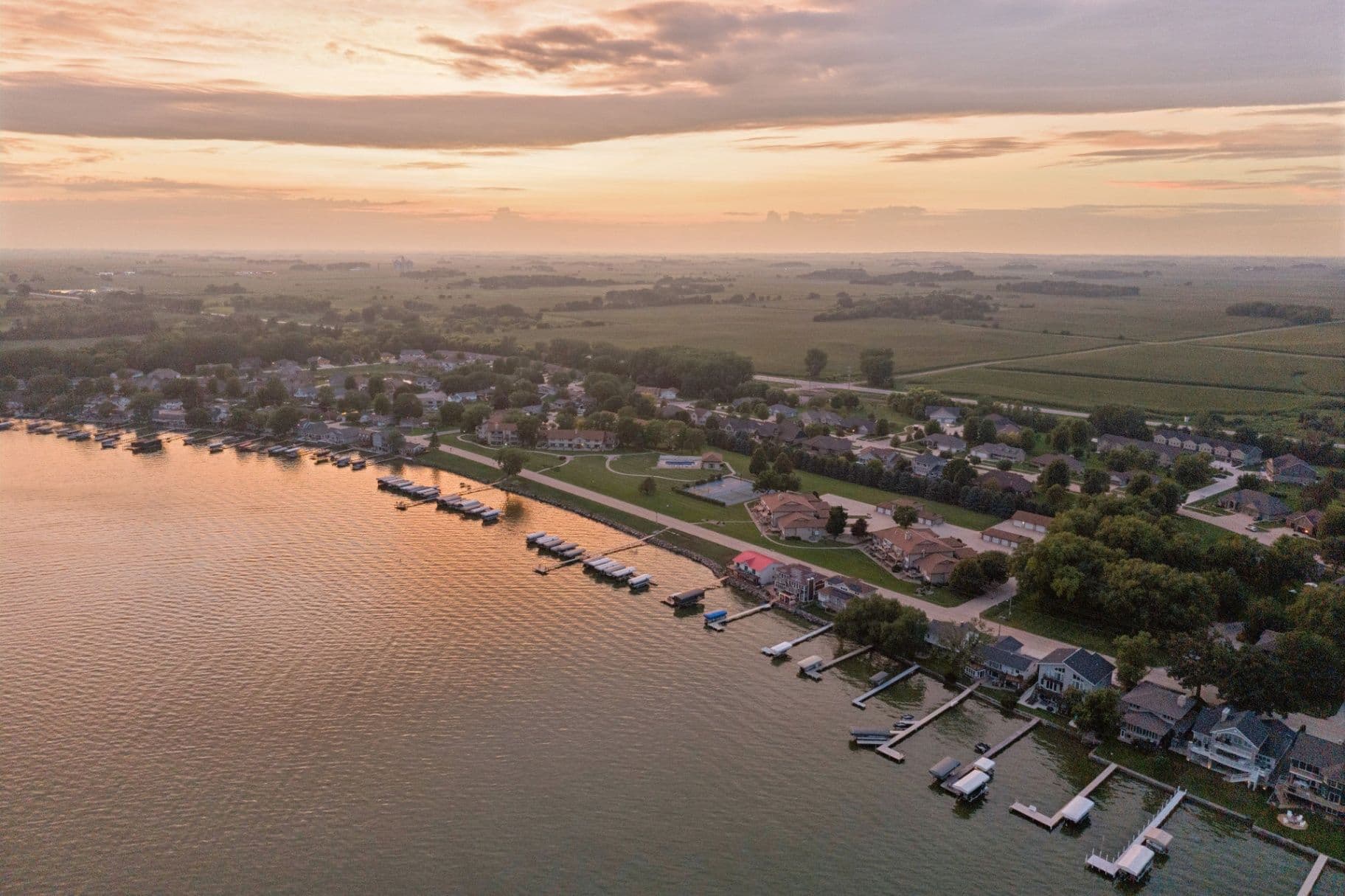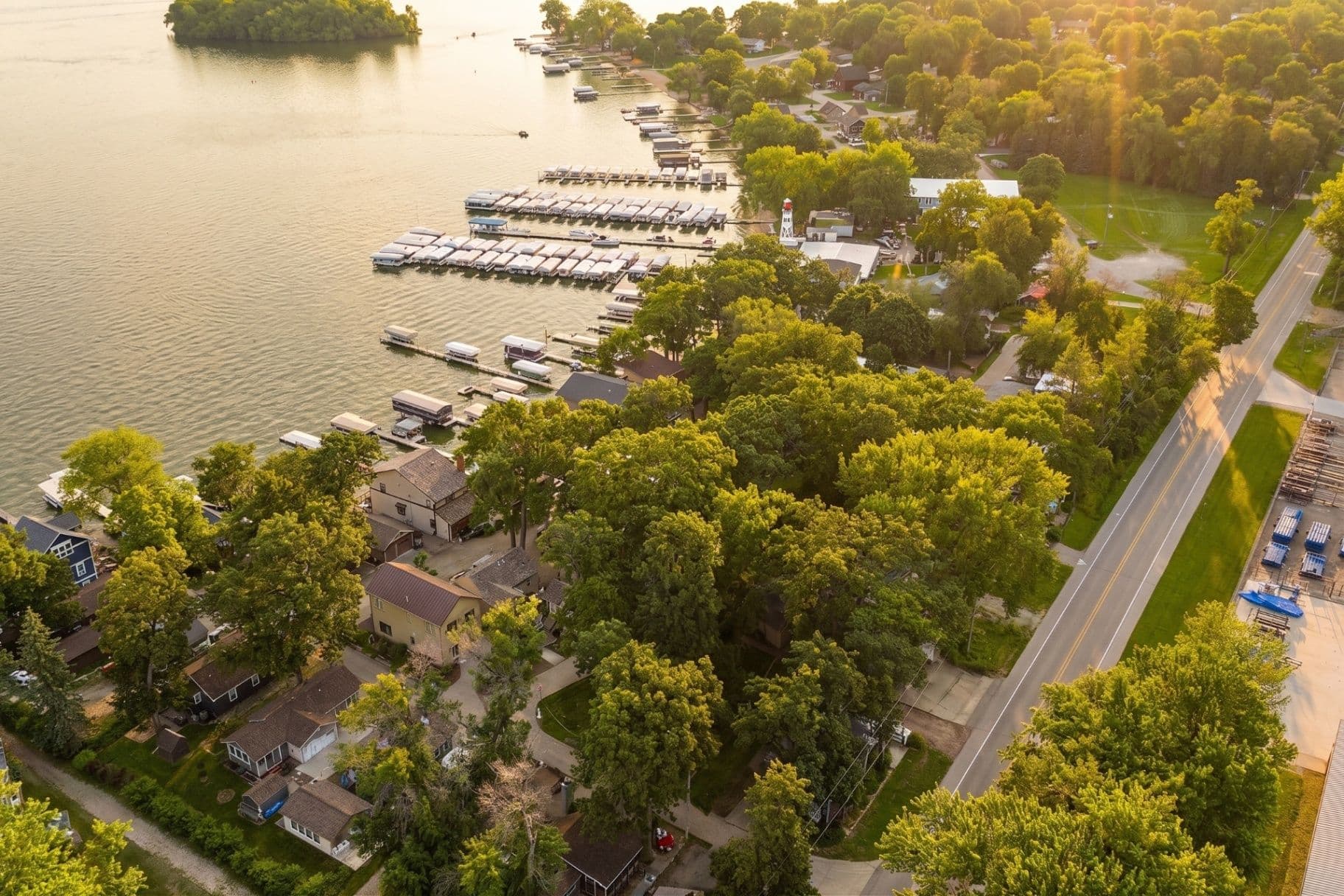
Many buyers picture a Clear Lake home and immediately think of a dock, a boat hoist, and morning coffee beside the water. But “lakefront,” “waterfront,” and “lake access” do not all mean the same thing: and the difference can affect your purchase price, daily lifestyle, maintenance responsibilities, and future plans.
When I help buyers look at Clear Lake Iowa lakefront homes or search for Clear Lake Iowa waterfront property for sale, I encourage them to slow down before falling in love with the view. The water may be close, but your legal rights to reach it, use it, or place a dock there depend on the documents behind the property.
Here’s how I break it down for buyers.
Start With the Shoreline
A true lakefront property generally adjoins Clear Lake. In other words, the parcel itself reaches the shoreline rather than sitting across a road, behind another lot, or within a neighborhood that shares a common access point.
That direct connection is the biggest difference.
With lakefront ownership, you typically walk from your property toward the water without crossing someone else’s land. You may have the strongest position for applying for dock or hoist permits, subject to Iowa Department of Natural Resources rules and local regulations.
But lakefront does not mean unlimited control.
Clear Lake is a public water body, and docks, hoists, buoys, and similar structures placed on public waters generally require permits. The Iowa DNR explains the current dock permitting process through its Dock & Permits page, including applications, transfers, renewals, and other requirements.
You may own the lot beside the water, but you do not automatically have the right to build any dock you want, extend it as far as you want, or change the shoreline without approval.
That distinction matters.

What “Lake Access” Can Mean
“Lake access” is a broader phrase. It can describe several very different arrangements, so I never treat it as a complete answer.
A property marketed with lake access may offer:
- A recorded access easement
- A shared neighborhood approach
- Association-owned shoreline
- A deeded dock or slip
- Use of a public boat ramp
- Informal access that is not clearly documented
Each option creates a different experience.
A home with access to a neighborhood dock may provide much of the fun of lake living without the price of direct shoreline ownership. You might still launch a kayak, keep a boat nearby, or walk to the water in a few minutes.
However, you may have to share the dock, follow association rules, pay assessments, join a waiting list, or coordinate with other homeowners. Access can be valuable: but it is not interchangeable with owning the shoreline.
Deeded Access and Easements: Read the Words
A deeded lake-access easement is a recorded legal right to use someone else’s land for a defined purpose. The easement may identify a particular strip of land, path, road, or shoreline area.
The details are important.
An easement might allow you to:
- Walk to the lake
- Carry a canoe or kayak
- Reach a shared dock
- Use a specified boat slip
- Maintain part of an access route
It may not allow you to install a private dock, store equipment, park a trailer, or bring guests whenever you choose.
The phrase “deeded access” sounds reassuring, but I want buyers to ask, access for what?
Is the right personal or shared? Is it exclusive? Does it transfer automatically with the property? Who maintains the path? Can the easement be changed? Are there restrictions on boats, swimming, fishing, or dock use?
The answer should come from the recorded documents: not from a listing description or a neighbor’s memory.
Your title company or real estate attorney can review and explain those rights. My role as a local agent is to help you identify the questions early and make sure the right professionals and documents are part of your due diligence.
Shared and Association Access
Some Clear Lake-area homes receive access through a homeowners association, neighborhood association, or shared private ownership arrangement.
This can be a smart middle ground for buyers who want the lake lifestyle without taking on the full cost of direct shoreline ownership. You may enjoy a common dock, boat launch, beach, or picnic area while living a short distance from the lake.
Still, association access comes with its own rulebook.
Before you make an offer, ask for:
- Covenants and bylaws
- Current association rules
- Annual dues and recent assessments
- Dock or slip assignments
- Waiting-list information
- Maintenance responsibilities
- Rules for guests and renters
- Boat-size or storage restrictions
- Policies for replacing or expanding docks
Also ask whether the access belongs to the property or only to the current owner. Some rights transfer with the home. Others may depend on an assignment, membership, or annual approval.
Cerro Gordo County’s Dock Assignment Policy illustrates why buyers need to examine the details. Public-dock assignments can involve permits, fees, insurance, maintenance, use requirements, waiting lists, and transfer restrictions. A dock assignment may be a privilege rather than a permanent real estate interest.
That is a very different thing from owning lakefront land.

Public Boat-Ramp Access Is Different Again
Public access can still be convenient, especially for buyers who own a smaller boat, kayak, paddleboard, or fishing gear. A nearby public ramp may let you enjoy Clear Lake without paying for a private dock or slip.
But public access is not private access.
You may need to transport your boat, wait during busy weekends, pay launch or parking fees, and find separate storage. You also cannot assume that public-ramp access gives you a place to leave a boat in the water.
When I compare properties with buyers, I ask them to picture the ordinary Tuesday: not just the perfect July Saturday. How far will you carry your gear? Where will the trailer go? How often will you realistically use the lake if launching requires extra planning?
The most affordable access option is not always the most useful one for your lifestyle.
Dock Rights Are Never an Afterthought
A dock can be one of the most emotionally appealing features of a lake property. It can also be one of the most misunderstood.
For any existing dock, hoist, slip, or boat lift, verify:
- Who owns the structure?
- Who owns or controls the land where it begins?
- Is the structure currently permitted?
- Is the permit active and transferable?
- Does the buyer need to apply for a new permit?
- Who pays for installation, removal, repairs, and storage?
- Are there limits on the dock’s size or location?
- Are there shared-use or guest restrictions?
The Iowa DNR states that docks and related structures on public waters must be permitted and signed. Local policies may add further requirements. Existing improvements should be checked rather than assumed to be grandfathered, transferable, or compliant.
A dock shown in photographs is not necessarily a dock right included with the purchase.
Shoreline Responsibilities Run Deeper
Lakefront ownership also means taking a closer look at the edge of the property. Shoreline maintenance may involve erosion, drainage, vegetation, steps, retaining structures, walkways, and storm damage.
Ask who is responsible for:
- Shoreline stabilization
- Seawalls or retaining walls
- Removing storm-damaged trees
- Maintaining steps and paths
- Repairing decks or approaches
- Clearing vegetation
- Removing docks seasonally
- Addressing drainage or runoff
Even modest shoreline work may require local or state approval. You should not assume that a previous owner’s improvement can be repaired or expanded without checking first.
The water’s edge changes over time. Your responsibilities may change with it.

Flood Risk and Insurance Still Matter
Being off the shoreline does not automatically remove flood or water-related concerns. Low-lying areas, drainage patterns, and proximity to the lake can all affect risk.
During due diligence, ask your lender and insurance provider about:
- Flood-zone status
- Flood insurance requirements
- Coverage for docks and boat lifts
- Water backup coverage
- Past flooding or water intrusion
- Shoreline and retaining-wall coverage
- Premium changes after renovations
A property can offer excellent lake access and still carry insurance considerations. Get estimates early, before your inspection and financing deadlines become tight.
My Clear Lake Buyer Checklist
Before purchasing any property advertised as lakefront, waterfront, or lake access, I recommend confirming:
- The legal description and parcel boundaries
- Whether the lot actually adjoins Clear Lake
- All recorded easements and rights-of-way
- Dock, hoist, and slip rights
- Current Iowa DNR permits
- Association documents and fees
- Public-access rules, if applicable
- Shoreline and maintenance responsibilities
- Floodplain information and insurance costs
- Any restrictions on building, rentals, boats, or improvements
A survey and title review can clarify what a casual visit cannot. If the language is confusing, have an Iowa real estate attorney explain it before you rely on it.
The Right Choice Depends on Your Kind of Lake Life
True lakefront offers the closest connection: stepping outside, seeing the water, and reaching the shoreline from your own property. It can also bring a higher purchase price, more maintenance, greater exposure to weather, and stricter regulatory responsibilities.
Lake access may offer a more manageable price and a shared community feel. But the experience depends on the exact easement, association rules, dock arrangement, or public facility involved.
Neither choice is automatically better.
The right choice is the one that matches how you plan to use the lake. If you want a private dock and direct shoreline living, focus on verified lakefront rights. If you mainly want a place to launch a kayak, walk to the water, or enjoy occasional boating, a well-documented access property may be a better fit.
I help buyers compare those differences before the excitement of the view takes over. If you’re exploring Clear Lake Iowa lakefront homes, reviewing the Clear Lake home-buying checklist, or searching for Clear Lake Iowa waterfront property for sale, contact Keys to Clear Lake. I’ll help you ask the right questions, understand the local context, and connect you with the legal and title professionals who can verify the details.